
Balance in yoga is often misunderstood. Many people assume it is about standing perfectly still or performing impressive poses without wobbling. In reality, balance is a dynamic process - a quiet, ongoing conversation between your body, breath, and mind.
Learning to balance on one leg, on your hands, or in a lateral extension asks you to slow down and truly listen. It demands a kind of full presence that can feel rare in everyday life.
At Rootra, we see balance poses not as feats of physical ability but as opportunities for connection - with yourself, with your breath, and with the steadiness that already lives within you.
Whether you are stepping onto the mat for the first time or deepening an existing practice, these six poses offer a meaningful place to begin.
Why Do Yoga Balance Poses Matter?
Balance poses strengthen far more than the muscles involved in keeping you upright. They build deep core stability, improve proprioception (your body's sense of its own position in space), and train the nervous system to respond with calm rather than reactivity.
There is also a subtle but significant mental dimension. When you wobble in Tree Pose or lose your footing in Warrior III, the invitation is not to try harder — it is to soften, breathe, and begin again. That capacity to reset without frustration is one of the most transferable gifts that yoga has to offer.
Balance poses also sit naturally within a Vinyasa Flow practice. In a flowing sequence, transitioning in and out of standing balances challenges the body to find stability through movement rather than stillness - a quality that makes the practice both dynamic and deeply grounding.
What Are the Best Yoga Balance Poses to Explore?
The following poses range from accessible to more advanced. There is no pressure to move through them in any particular order or to achieve any particular shape.
Work at your own pace, honour your body on the day, and remember that rest is always an option.
Tree Pose (Vrksasana)
Level: Beginner
Focus: Stability & Grounding
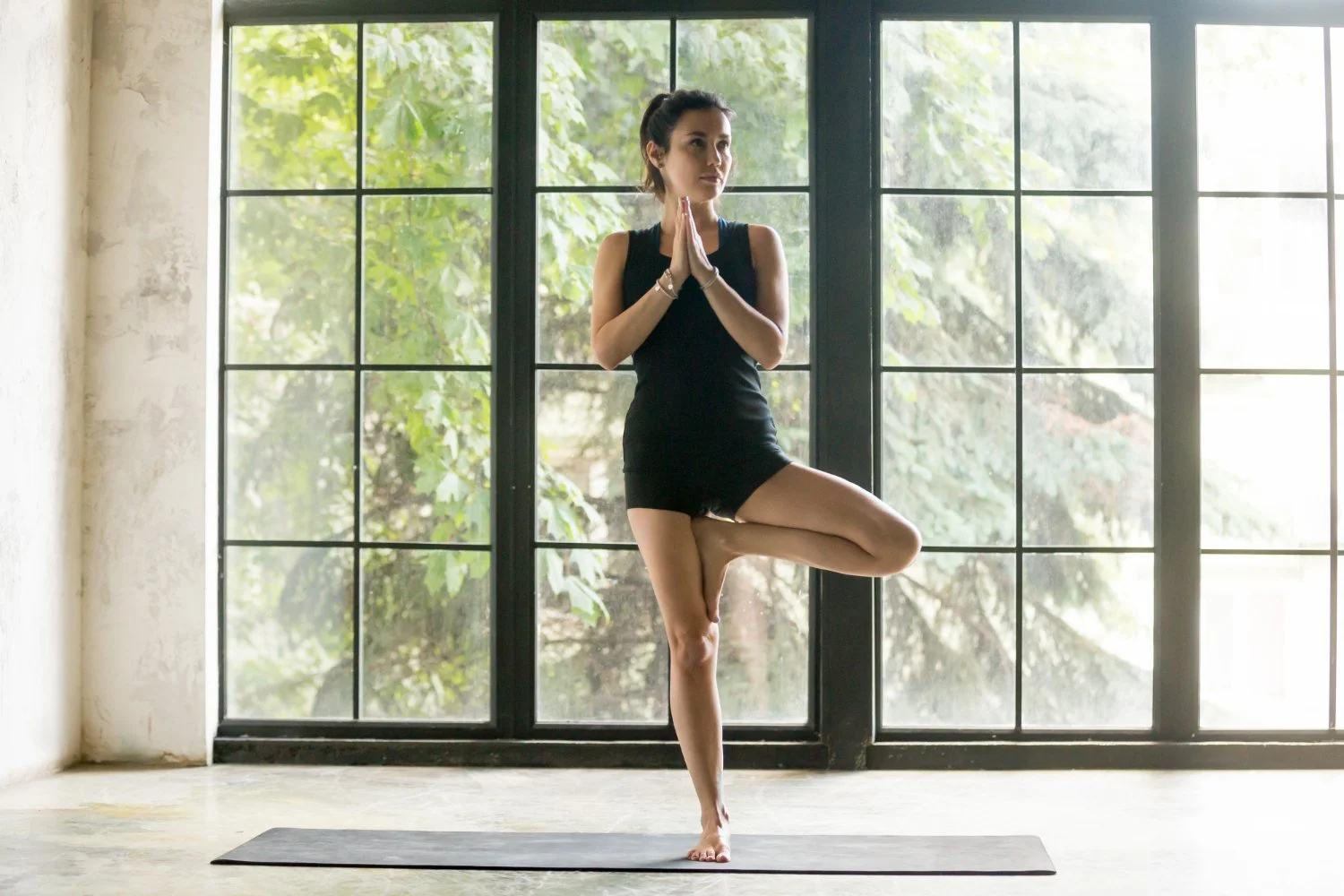
Tree Pose is often the first balance pose people encounter, and for good reason. Standing on one leg, you bring the sole of the opposite foot to your inner calf or inner thigh — never pressing directly against the knee joint. Arms can rest at the heart, extend overhead, or spread like branches.
What makes Vrksasana particularly powerful is the attention it demands. A soft gaze at a fixed point (your drishti) helps settle the mind, while the grounded foot encourages a sense of rooting that can feel genuinely calming.
This pose is a beautiful starting point for understanding how stillness and subtle movement can coexist.
Warrior III (Virabhadrasana III)
Level: Intermediate
Focus: Strength & Focus
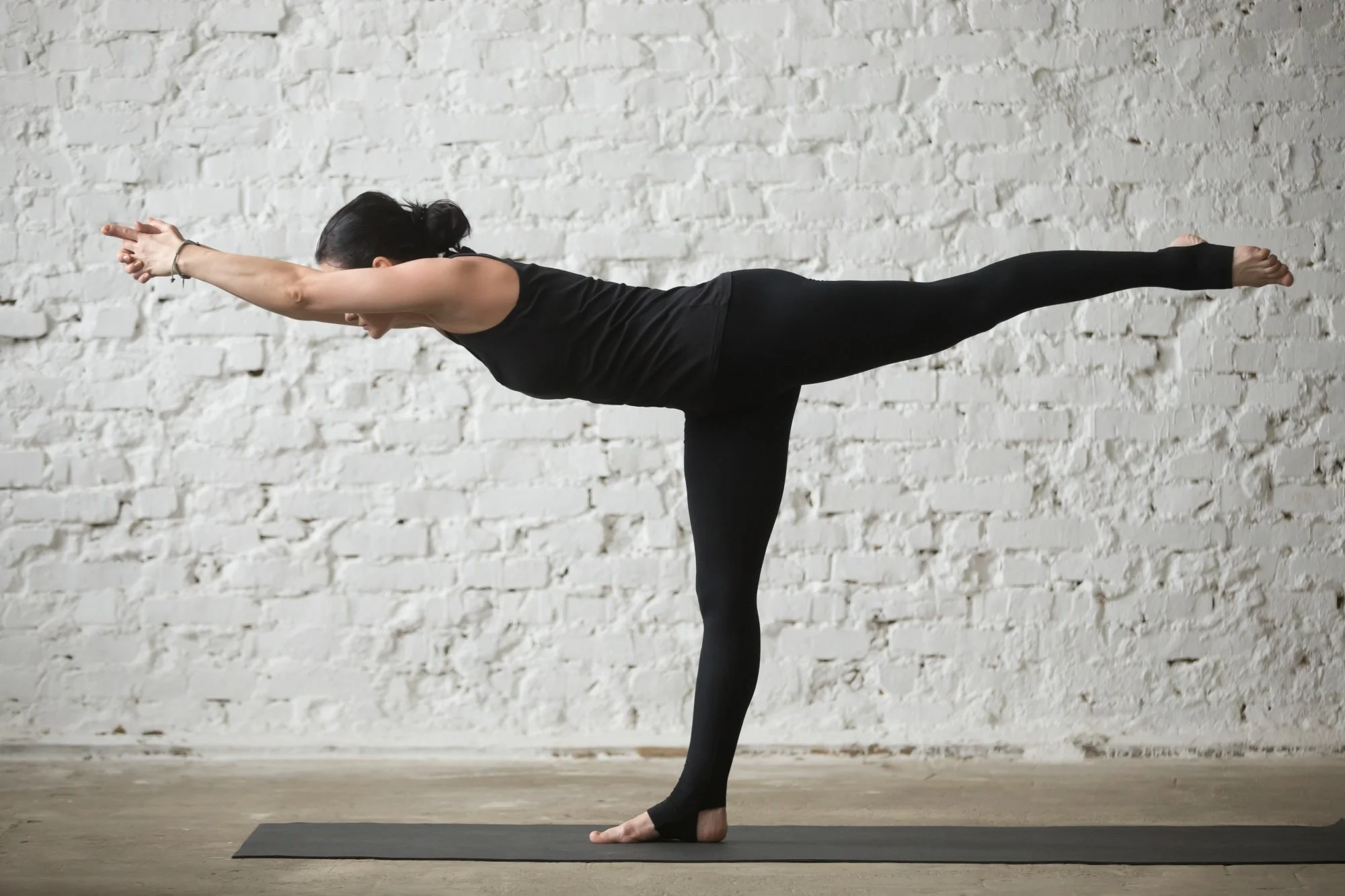
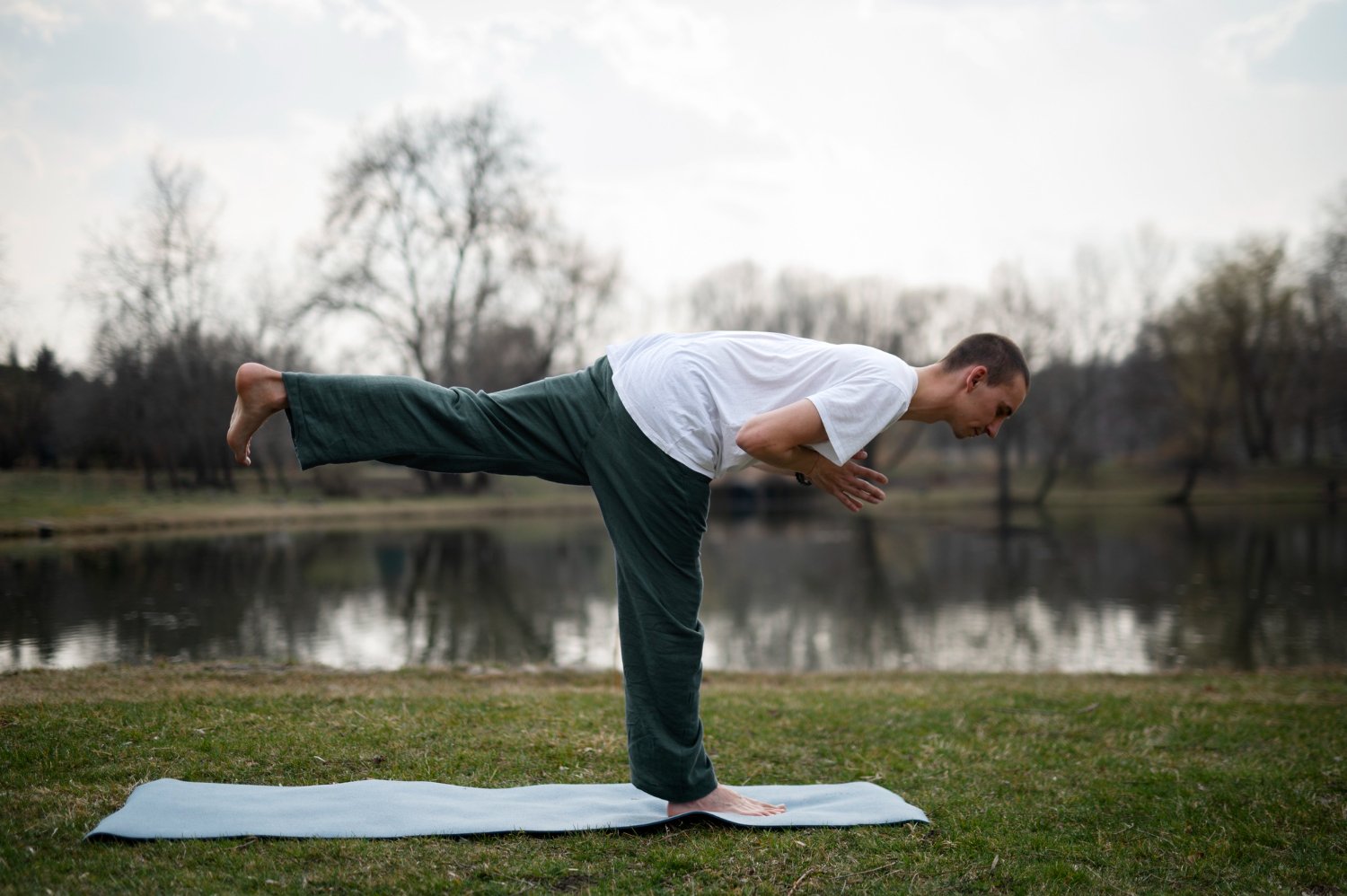
From a standing position, Warrior III asks you to hinge forward at the hip and extend the back leg behind you, creating a long, horizontal line with the body. Arms can extend forward, out to the sides, or rest alongside the hips — whichever feels most supportive.
This pose strengthens the entire back body, from the glutes and hamstrings to the muscles running alongside the spine. It also demands a great deal of mental focus. The mind tends to wander; Warrior III gently calls it back.
Practising with a slight bend in the standing knee makes it more accessible and reduces joint strain.
Half Moon pose (Ardha Chandrasana)
Level: Intermediate
Focus: Lateral Balance & Pelvic Stability
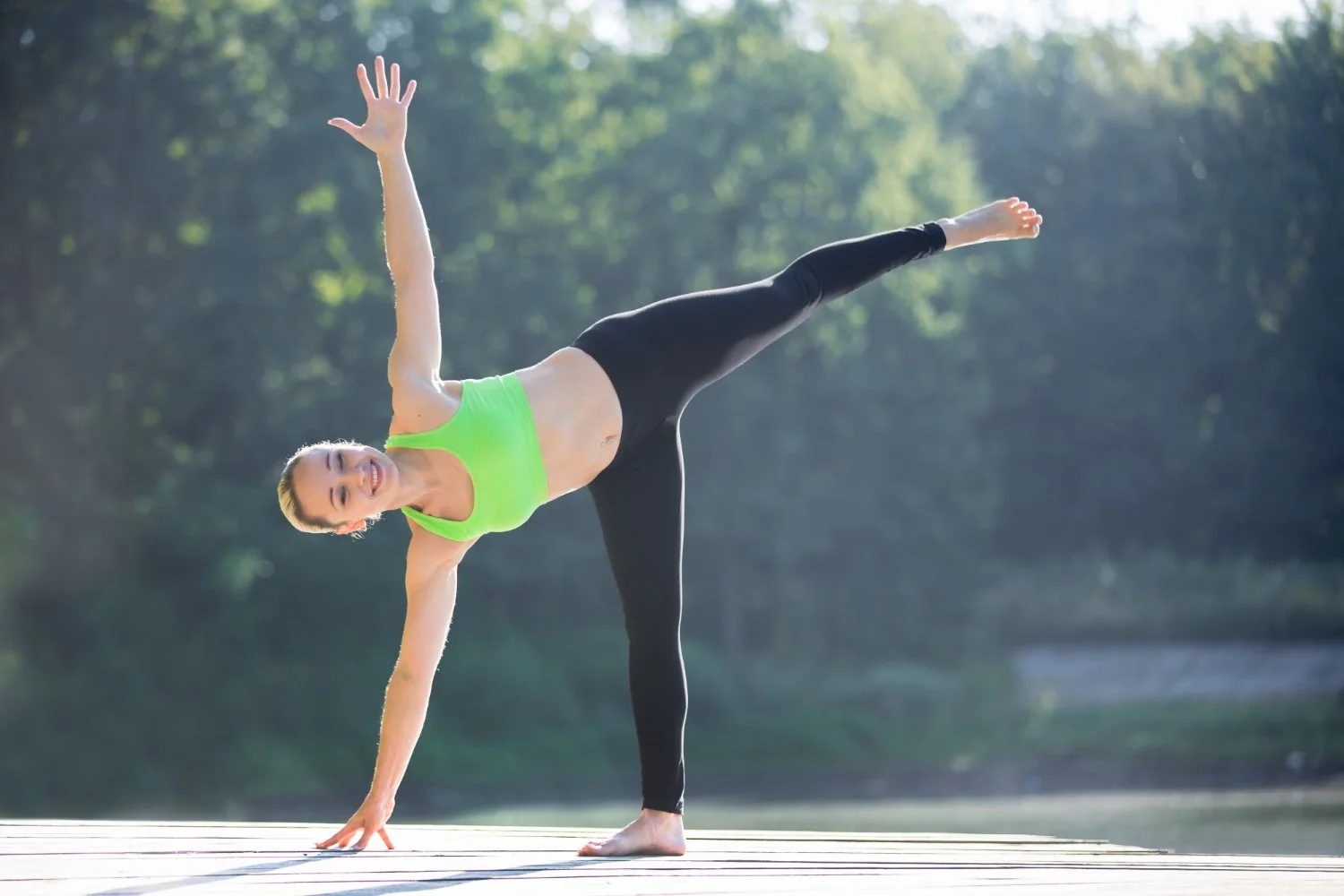
Half Moon Pose is a lateral balance that opens the body sideways. From a Warrior II position, you shift weight onto the front foot, bring one hand to the floor or a block, and lift the back leg parallel to the ground. The upper arm extends toward the ceiling, and the gaze can follow.
Ardha Chandrasana strengthens the standing leg deeply while creating a wonderful openness through the chest and hip.
Using a block under the lower hand is not a modification; it is a wise practice that allows the pose to be explored with greater ease and stability. The name itself offers a beautiful image: your body as a crescent, light and expansive.
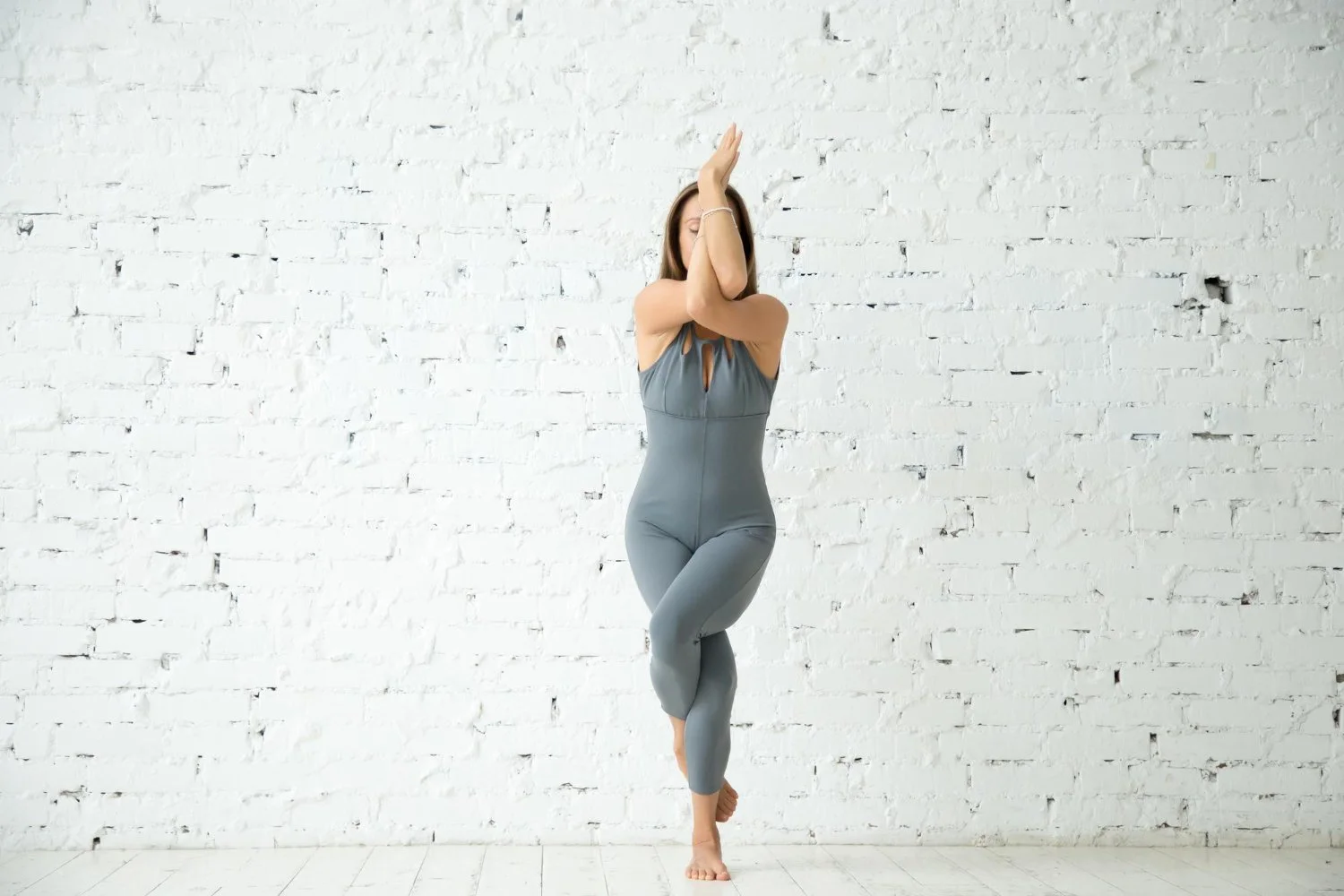
Eagle pose (Garudasana)
Level: Intermediate
Focus: Concentration & Upper Body Opening
Eagle Pose asks you to stand on one leg, crossing the opposite leg over the thigh and hooking it around the calf, or simply resting the foot against the shin for a gentler variation. The arms mirror this wrapping, one elbow stacking over the other, forearms crossing, and palms pressing together where possible.
What Eagle Pose offers is a unique blend of compression and release. While the body wraps inward, the upper back broadens, and the shoulders open in a way that many people rarely experience.
Releasing from the pose brings a notable sense of spaciousness. It also significantly strengthens the ankles and knees - an often-overlooked benefit of regular practice.
Dancer pose (Natarajasana)
Level: Advanced
Focus: Heart Opening & Grace
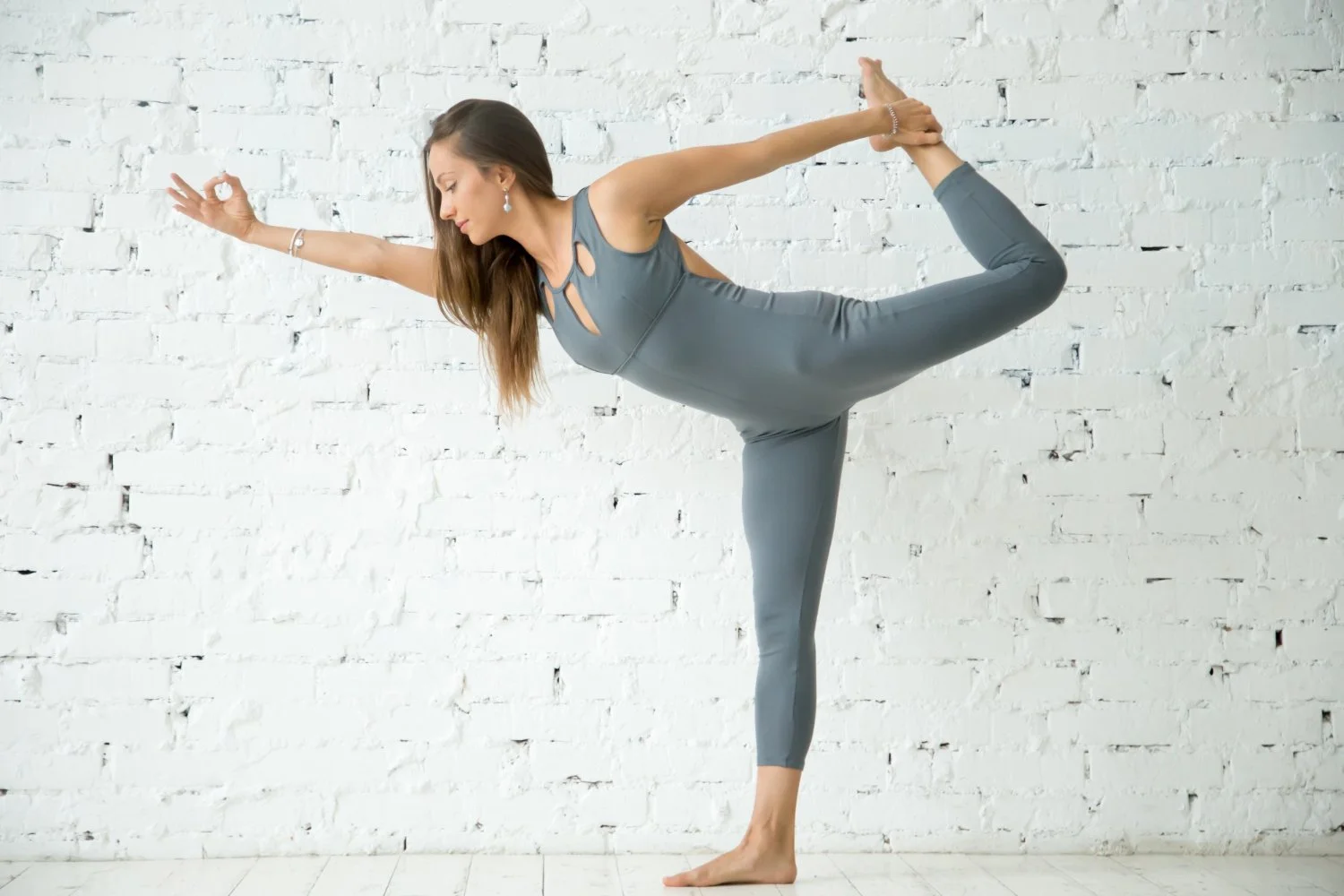
Dancer Pose is one of yoga's most graceful and visually striking postures. Standing on one leg, you reach back to grasp the opposite foot or ankle, then slowly extend the held leg behind and upward as the torso leans forward and the free arm reaches ahead.
This pose is a genuine advanced posture because it requires flexibility through the quadriceps and hip flexors, strength in the standing leg and back, and a willingness to find openness in the chest and shoulders simultaneously. Practising near a wall can be a kind and sensible approach.
However, in Natarajasana, the feeling of lightness it can bring is remarkable, a reminder that strength and ease are not opposites.
Crow pose (Bakasana)
Level: Advanced
Focus: Core Strength & Arm Balance
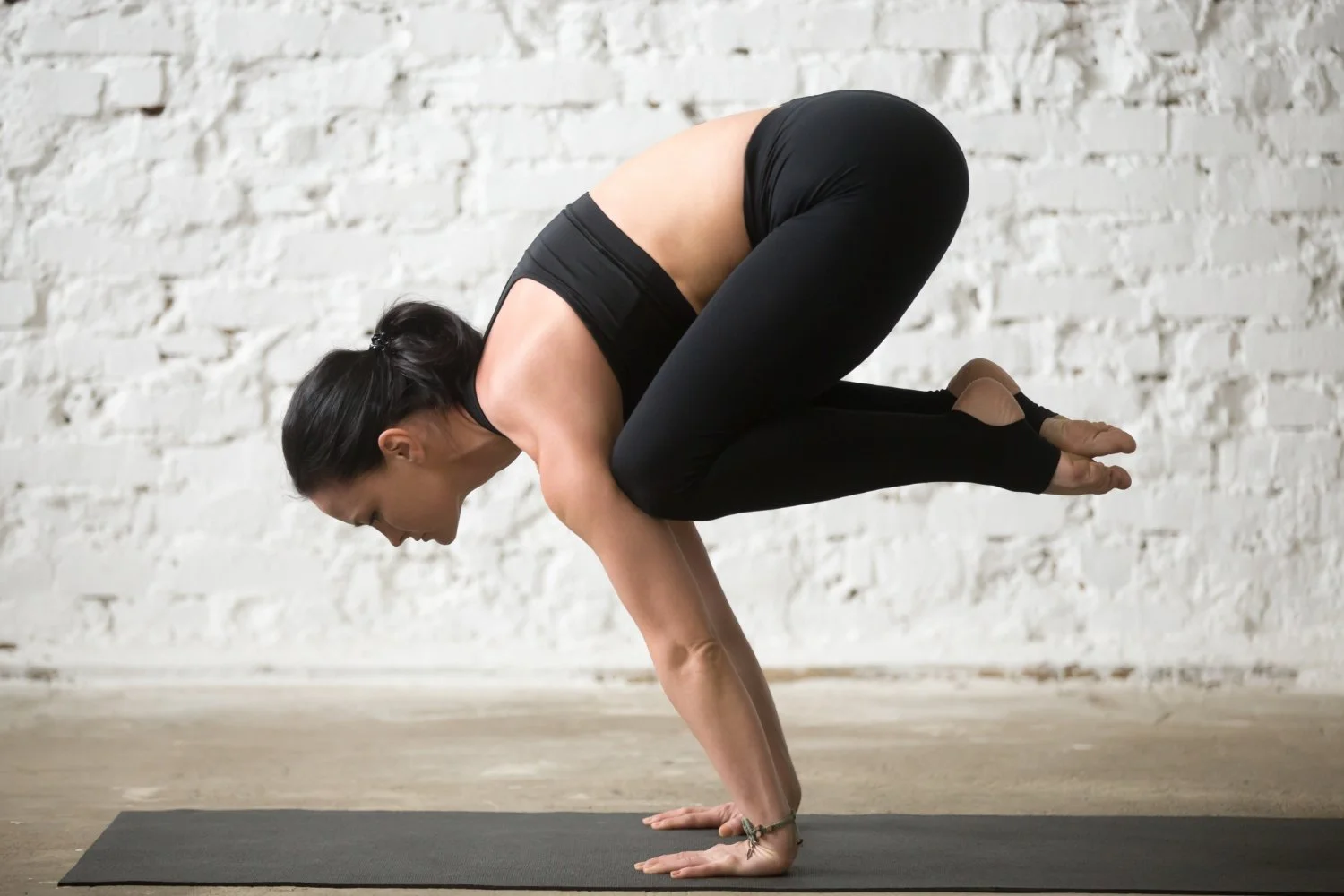
Crow Pose is the gateway to arm balancing and represents a significant shift in how we think about balance in yoga.
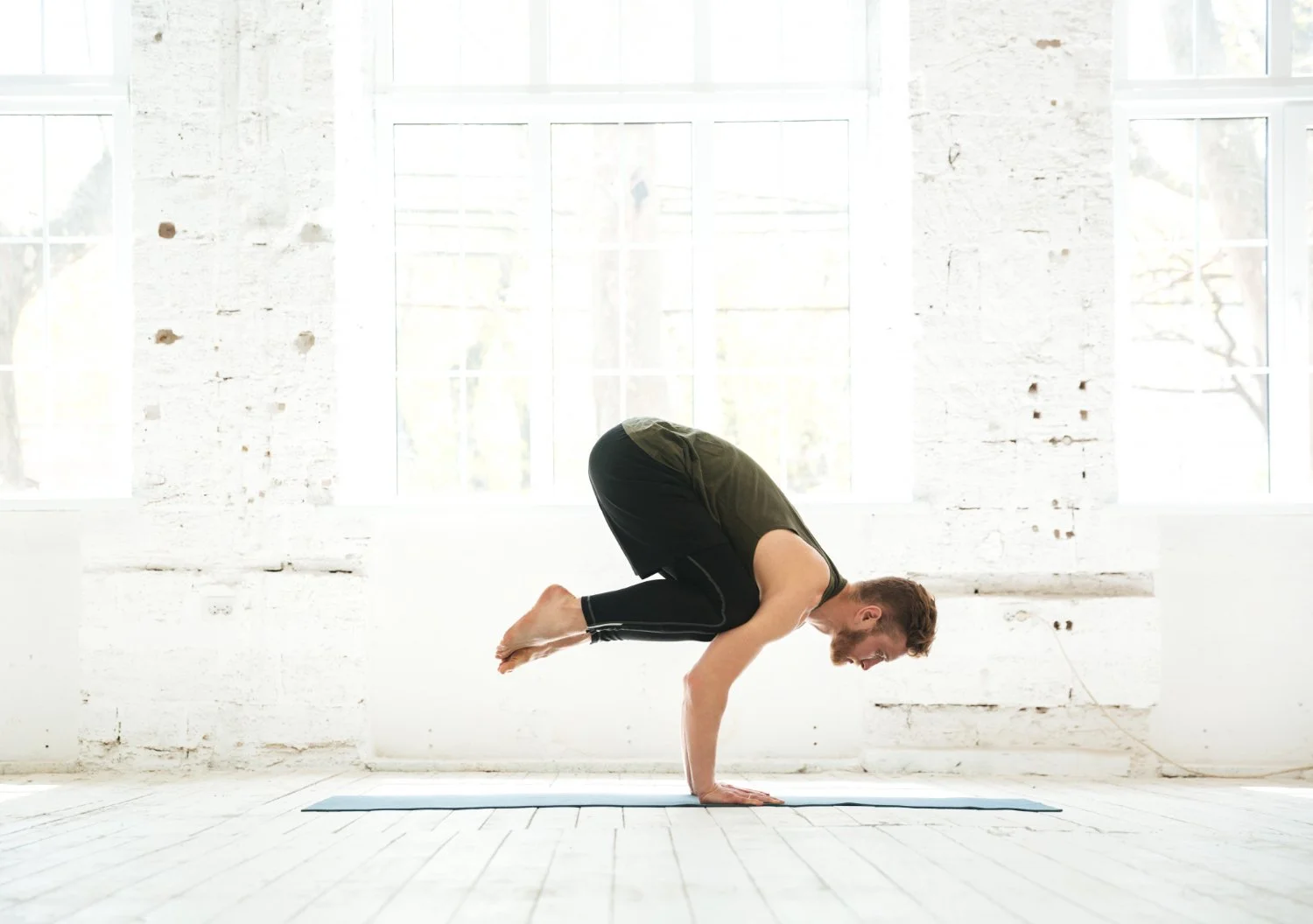
Rather than finding stability through a grounded foot, Bakasana asks you to balance entirely on your hands, with your knees resting on the backs of your upper arms (triceps) and your gaze slightly forward.
Success in Crow Pose depends less on raw strength than on understanding where to place the weight. Leaning the weight of the body forward, far more than feels natural at first, is what allows the feet to lift.
Placing a folded blanket beneath the head reduces the fear of falling and allows genuine exploration. The core engagement required carries well beyond the mat into daily life and movement.
What Are the Benefits of Yoga Balances?
Practising balance poses consistently creates changes that extend well beyond the physical.
Over time, you may notice improvements in how you move through everyday life - greater ease on uneven surfaces, a more upright posture, and a general sense of physical confidence.
There is also growing evidence that balance training supports cognitive function and mental sharpness, particularly as we age.
The mental demands of holding a balance pose, staying present, adjusting continually, and breathing through discomfort build a quality of attentive calm that proves genuinely useful off the mat.
Benefits of Regular Balance Practice
Builds deep core and postural stability
Strengthens ankles, knees, and hips
Improves proprioception and spatial awareness
Trains the nervous system to stay calm under pressure
Supports focus and present-moment awareness
Enhances coordination and physical confidence
Reduces risk of falls and injury over time
Cultivates patience and a gentle relationship with effort
To explore how these physical and mental gains fit into a wider wellbeing practice, read more about the benefits of yoga and how they can support your everyday life.
Learn Balance Poses at Rootra
At Rootra, we believe that how you approach a pose matters just as much as the pose itself. Balance work is not about achieving a perfect shape or comparing yourself to others in the room. It’s about showing up, breathing, and allowing the practice to meet you exactly where you are.
If you are exploring these poses and looking for in-person guidance, our Rootra Yoga sessions offer a welcoming space to practise with support.
You can also discover how movement and wellbeing connect in our Rootra Reset sessions — a broader exploration of what it means to feel genuinely well.
Book your Rootra Yoga session
FAQs
What is the easiest yoga balance pose for beginners?
Tree Pose (Vrksasana) is widely considered the most accessible balance pose for beginners. It requires no prior flexibility and can be practised with the foot resting at the ankle or inner calf rather than the inner thigh. Focusing your gaze on a single fixed point — known as a drishti - significantly improves stability. Practising near a wall in the early stages is also a sensible and entirely valid approach.
How long does it take to master yoga balance poses?
There is no fixed timeline, and "mastery" in yoga is less about perfection than about developing a consistent, honest relationship with the practice. Many people find meaningful progress in standing balance poses like Tree Pose or Warrior III within a few weeks of regular practice. More complex postures, such as Dancer Pose or Crow Pose, may take months or longer to master and continue to evolve throughout a lifetime of practice. Consistency, patience, and a willingness to wobble matter far more than speed.
Why do I keep falling out of yoga balance poses?
Falling out of balance poses is completely normal and is not a sign that you are doing something wrong. Balance is dynamic — it shifts with fatigue, stress, focus, and even the time of day. Things that tend to help include pressing firmly through all four corners of the standing foot, engaging the muscles of the standing leg rather than locking the knee, fixing your gaze on a still point, and softening your breath. Tension in the body and held breath are among the most common causes of instability.
Are yoga balance poses good for anxiety?
Yes, balance poses can be genuinely supportive for anxiety. They require focused, present-moment attention, which gently interrupts cycles of rumination and worry. The breath awareness involved in maintaining balance also activates the parasympathetic nervous system, the body's rest-and-digest response, which can help reduce the physical sensations of anxiety over time. At Rootra, we approach yoga as a nervous system practice as much as a physical one, and balance poses are a meaningful part of that.
